Projects
HA&RD Project
With the creation of a multidisciplinary working group, the conditions are created to propose the most innovative technological option to produce a customisable medical device that can be used during daily activities, improving the quality of services provided by health institutions and optimising the functionality of users in hospital settings or outside the clinic.
This project aims to create a small, portable, hygienic and wireless multisensory medical device, to be used by people with limitations in functionality, autonomy and independence, due to changes in the functions of the upper limb structures. This device will enable the monitoring, training and rehabilitation of parameters such as strength and range of movement of the hand, responding to the need to make users responsible and involved in their treatment process, giving them more autonomy and responsibility during it. It can be customised for each user, making this approach more focused on their performance, meeting their specific needs and achieving health gains. With the establishment of a multidisciplinary working group, the conditions are created to propose the most innovative technological option for the production of a customisable medical device that can be used during daily activities, improving the quality of services provided by health institutions and optimising the functionality of users in hospital, institutional, home or community settings.
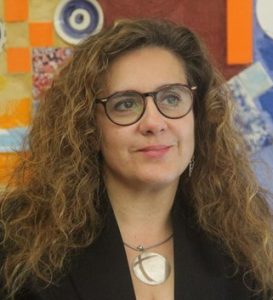
Elisabete Roldão
Assistive Technology and Occupational Performance Laboratory (aTOPlab), Center for Innovative Care and Health Technology (ciTechCare), School of Health Sciences of the Polytechnic of Leiria
Dulce Gomes
Assistive Technology and Occupational Performance Laboratory (aTOPlab), Center for Innovative Care and Health Technology (ciTechCare), School of Health Sciences of the Polytechnic of Leiria
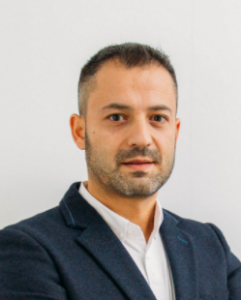
Rui Fonseca-Pinto
Assistive Technology and Occupational Performance Laboratory (aTOPlab), Center for Innovative Care and Health Technology (ciTechCare), School of Health Sciences of the Polytechnic of Leiria
Collaborations
Contribution to the discriminative improvement of the stereognosy test of the Screening Assessment of Sensory Integration (SASI) – Research ED. V.2.2.
In Portugal, the translation and cultural and linguistic adaptation of the SASI v.2.2 was performed (Costa, 2019) and validation was initiated, where the reliability and discriminant and construct validity were studied (Marques, 2020). In the latter, a good internal consistency and interobserver agreement were found. The SASI also proved to be an instrument capable of discriminating between age groups, where six of its domains measure the total SASI score and this total can be used in the Portuguese population. The domain assessing tactile discrimination shows an acceptable reliability, but with a not very high value (Marques, 2020). Based on the different studies carried out where the validity of the SASI was assessed, one of the domains that obtained less significant data was tactile discrimination. This domain of the SASI is composed of three specific tests: stereognosy, tactile stimulus localisation and kinaesthesia. Over the years, several researchers, sensory integration therapists who apply the SASI and the author herself have noticed that the stereognosy test of the SASI was not very sensitive to small variations in children’s performance, and therefore it would have to undergo some changes in order to become more discriminating.
In this sense, the aim of this research is to contribute to improving the discriminative capacity of the stereognosy test of the Screening Assessment of Sensory Integration (SASI) – Research Ed. V.2.2 and as a specific objective to verify the discriminant validity between the stereognosy test of the SASI Research Ed. V.2.2 and the stereognosy test with modifications.

Ana Reis
Master’s student in Occupational Therapy – Sensory Integration specialisation at School of Health Sciences of Alcoitão
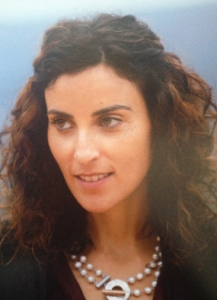
Helena Reis
(Supervisor) – Center for Innovative Care and Health Technology (ciTechCare), School of Health Sciences of the Polytechnic of Leiria
Paula Serrano
(Co-supervisor) – School of Health Sciences of Alcoitão
Smart Speakers in functional diversity: a case study with a person with Duchenne Muscular Dystrophy
Study within the Masters in Occupational Therapy of the Polytechnic of Porto by Rafael Tavares, supervised by Jaime Ribeiro, both from aTOPlab. The Masters is co-supervised by Helena Sousa from the Polytechnic of Porto.
We aim with our work to analyse potential variations in the participation and performance of an individual with DMD, the burden on caregivers, and also to scrutinise the real potential of SS as an environmental control unit.

Rafael Tavares
Master’s student in Occupational Therapy, School of Health Sciences of the Polytechnic of Porto & Assistive Technology and Occupational Performance Laboratory (aTOPlab), Center for Innovative Care and Health Technology (ciTechCare), School of Health Sciences of the Polytechnic of Leiria
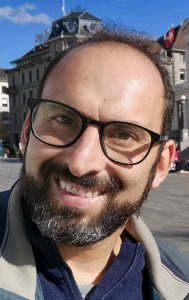
Jaime Ribeiro
Assistive Technology and Occupational Performance Laboratory (aTOPlab), Center for Innovative Care and Health Technology (ciTechCare), School of Health Sciences of the Polytechnic of Leiria